
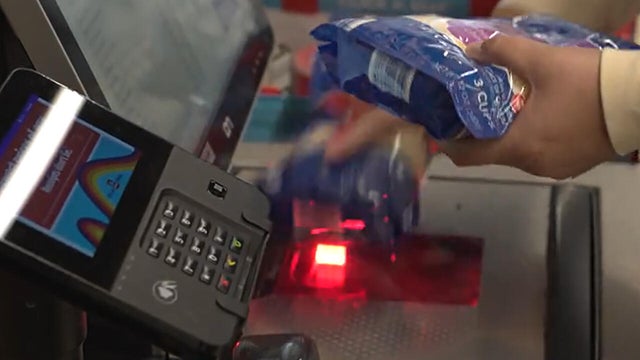
The beeping of a register has become a stark reminder that grocery costs have surged. The Bureau of Labor Statistics reports that food prices this Thanksgiving are 32 percent higher than they were in 2020. A mother shopping with her daughter summed it up: “It feels like all my money goes to food.”
The USDA stopped publishing its food‑insecurity survey last year, so the most recent data come from other sources. In 2024, nearly 14 percent of Americans said they were having trouble getting enough to eat, making the holiday season a test of how far they can stretch their budgets.
Shoppers are also changing where they buy their groceries. Discount chains such as Aldi, Lidl and Food 4 Less are expanding their share of the market, putting pressure on traditional supermarkets like Kroger. Aldi’s chief operating officer, David Rinaldo, noted that the stigma once attached to discount stores has faded. He said the company plans to open 150 new stores this year and added, “I never imagined we’d become so mainstream that people would choose a limited‑assortment discount grocer as their regular shop.”
A key attraction is the retailer’s own private‑label products, which are produced by contract manufacturers for specific store brands. These items now occupy about 92 percent of Aldi’s shelf space. “Private‑label lines have been growing faster than national brands for nine of the last ten years,” Rinaldo said, describing the shift as a broader trend rather than an exception.
How consumers pay for food is shifting as well. A recent Urban Institute survey found that roughly 35 percent of respondents use credit cards for grocery purchases, and one in four of those users report difficulty repaying that debt. Senior research associate Cassandra Martinchek explained, “A sizable portion of families are turning to credit to buy groceries, which creates debt in the process.” She warned that the concern extends beyond credit cards to digital “buy‑now‑pay‑later” (BNPL) services such as Klarna, Splitit, Affirm, Sezzle and Zip. The same poll showed that one in ten shoppers rely on BNPL for food, and more than a third of those users have missed a payment. “These tools can help people meet immediate needs, but they may jeopardize long‑term financial stability,” Martinchek said.
Jordan Williams, a mother of a two‑year‑old and engaged to Julian Morgan, described her own experience with a BNPL app. She began using the service before her engagement, but as a single parent she soon fell behind. “It felt like a rat race—I couldn’t keep up,” she recalled. Williams said she was stuck in a revolving line of credit, constantly paying for previous purchases instead of buying what she needed. When she missed a payment, the app locked her account, forcing her to clear the entire balance before she could shop again. “I couldn’t afford $200 in groceries the first time, and now $160 is out of reach, and the app is unusable,” she said, adding that a missed payment also hurts her credit score after 30 days.
Williams, who holds a master’s degree, teaches English at the University of North Carolina at Greensboro and works part‑time as a social‑media influencer, said she never expected to be in this position. “If it were just a case of poor money management by a 28‑year‑old, that would be one thing,” she said. “But when it looks like this for me, what does it mean for everyone else?”
Unlike gasoline prices, which have begun to ease, grocery costs remain high. Williams feels the pressure most acutely at month’s end. “Payday is on the 28th, and by the 24th we’re already stretching to make it,” she explained. To cope, she plans a potluck Thanksgiving, acknowledging that many families cannot afford to host a full gathering without contributions from guests.
Economists expect the rapid rise in food prices to moderate by next Thanksgiving, offering a glimmer of relief. Still, the classic Norman Rockwell vision of a bountiful holiday table remains out of reach for many.
Story by Mark Hudspeth and Mary Raffalli. Edited by Ed Givnish.
For additional resources, see the “Sunday Morning” 2026 Food Issue Recipe Index, which features menu ideas from leading chefs, cookbook authors, food writers, restaurateurs and the editors of Food & Wine Magazine.