
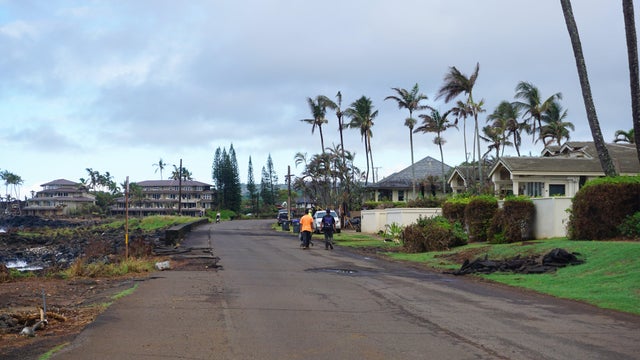
PO'IPŪ, Hawai‘i — A month after Hurricane Lowell battered Kaua‘i, the island’s streets are littered with fallen trees, construction crews, and homes that suffered damage. At the Sheraton Kaua‘i Resort, where more than 100 employees were let go, piles of sand cover the property and the pool’s concrete deck has collapsed into the beach just steps from the ocean.
In the weeks following the September storm, unemployment filings on Kaua‘i surged from 69 to roughly 1,800, reflecting massive layoffs in tourism as visitor numbers plummeted. The Hawai‘i Department of Human Services reported that Medicaid applications from island residents rose by about half in the subsequent month.
Medicaid often serves as a vital safety net during crises, but new work‑requirement provisions in the One Big Beautiful Bill Act—signed by President Trump last year—threaten to strip coverage from people living in disaster‑hit counties. The law obliges most nondisabled adults enrolled in Medicaid in 43 states and the District of Columbia to work, volunteer, or attend school for at least 80 hours each month, with eligibility reviews slated to begin in January.
Most states can grant a temporary waiver of these work requirements to residents affected by a disaster. The authority for such waivers comes from a federal statute that lets the president issue a disaster or emergency declaration and authorize federal aid, but the declaration process can take months—or may never happen.
Counties designated as disaster zones are supposed to be exempt from the work rules, one of several limited carve‑outs. However, it remains uncertain whether people who lost jobs after Hurricane Lowell would qualify for an exemption months later, and the Trump administration has not clarified how long a state may apply the natural‑disaster waiver.
Rochelle Ganotisi, a mother of five, and her boyfriend were among those laid off by the Sheraton. They are surviving on unemployment benefits and occasional part‑time work. Their union secured three months of health coverage for the hotel’s hospitality staff. If Ganotisi does not return to her housekeeping position after that period, she intends to apply for Medicaid, the joint federal‑state program that provides health insurance to low‑income individuals and people with disabilities.
Hawai‘i Governor Josh Green, a Democrat and practicing physician, warned that swift disaster declarations are essential as Medicaid changes loom. The Centers for Medicare & Medicaid Services (CMS) allowed states to postpone enforcement of the work requirements until next July, but eligibility checks are still expected to start on Jan. 1.
“It would be catastrophic if suddenly forty‑ or fifty‑thousand people lost their Medicaid coverage,” Green said. “Our rural hospitals, nurse practitioners, and doctors would feel the impact, so timing is critical.”
State officials in Hawai‘i said they will keep people who fail to meet the work criteria enrolled until July.
At least 34 states and Washington, D.C., plan to adopt the optional hardship exemptions for the work requirements. Four states—Indiana, Iowa, Missouri and Ohio—have indicated they will not use the exemptions, according to the health‑policy nonprofit KFF. All four received disaster declarations for severe storms and flooding this summer.
CMS spokesperson Timothy Foster told KFF Health News that states may request a longer hardship exemption if they can demonstrate that disaster‑related conditions continue to impede compliance with work requirements.
Tom Cotter, chief executive of the Health Response Alliance, a nonprofit that works to improve health‑care access during emergencies, explained that loss of coverage often forces people into emergency rooms and charitable clinics, the few providers that will treat patients regardless of ability to pay.
“Those facilities are already stretched thin during a crisis because patient volumes surge,” Cotter said. “That drives up costs for a health system already burdened by the disaster.”
He added that additional work requirements could slow a community’s economic recovery, forcing residents to worry about paying for health care while dealing with many other pressing concerns.
When a presidential disaster or emergency declaration is issued, the short‑term hardship exemption applies for the entire month of the event. The exemption can be applied retroactively, and enrollees may be reimbursed for expenses incurred in prior months.
Nebraska’s early adoption of Medicaid work requirements in May gave a preview of how the hardship waiver might work, but relief was delayed. It took President Trump three months to declare a federal disaster for the March‑April wildfires, and for severe storms, tornadoes and flooding in May, he waited until August.
Six Nebraskans who lost coverage because they did not meet the work criteria were later found eligible for a hardship exemption, and the state’s Department of Health and Human Services began reprocessing their cases in October.
Sarah Maresh, director of the Health Care Access program at the advocacy group Nebraska Appleseed, said the rollout of the work requirements has been plagued by uncertainty.
“The confusion stems from the fact that the rules affect people differently depending on their circumstances,” Maresh said. “It will be very challenging for new applicants.”
Recovery after a natural disaster can take years. The U.S. Small Business Administration estimates that about nine out of ten businesses fail within two years of a disaster. Housing shortages further hinder recovery as workers repair homes or relocate farther from their jobs. Three years after the 2023 Maui wildfires, many storefronts remain closed in what was once a bustling district.
After CMS issued rules governing the work‑requirement exemptions, several Democratic‑led states sued the agency, arguing that the narrow window for securing a natural‑disaster waiver places an undue burden on state Medicaid agencies tasked with determining eligibility.
In its response, CMS said the restrictions are intended to ensure that exemptions are granted only when a disaster truly impedes enrollees’ ability to meet work requirements.
According to KFF Health News, President Trump has denied nearly a quarter of disaster and emergency declaration requests as of mid‑November— a higher denial rate than any administration in the past 20 years. Decision times have lengthened nationwide, but the effect is most pronounced in states with Democratic governors, which have experienced both higher denial rates and longer waiting periods than states with Republican leadership, based on 2026 analyses from the Associated Press and Politico’s E&E News.
White House spokesperson Lauren Bis rejected claims that the president’s disaster‑relief decisions are politicized, stating that his approach ensures taxpayer money is used appropriately and that federal assistance is meant to supplement, not replace, state responsibilities.
The major disaster declaration for Kaua‘i was the sixth such declaration for Hawai‘i in 2026. By November, Hawai‘i had received more disaster and emergency declarations than any other state that year. A presidential declaration for a 6.0‑magnitude earthquake on Hawai‘i Island, which damaged more than 300 homes, took roughly three months to issue.
Other states have faced even longer waits. New Mexico, where Democrats control the governor’s office and both legislative chambers, endured a nine‑month delay for a presidential disaster declaration related to severe storms and flooding in September 2025. Illinois, also under a Democratic trifecta, waited over seven months and was ultimately denied; the state has not secured any major disaster declarations during Trump’s second term despite multiple attempts.
Some displaced workers lack any safety net. Oscar Cardova was employed at The Terrace Hanalei, a restaurant on Kaua‘i’s North Shore that suffered extensive damage in the hurricane. When the restaurant closed, he lost his employer‑provided health insurance. Although he holds a work‑permit visa from Peru, his immigration status disqualified him from Medicaid.
Cardova and his wife, Yesenia, now live in a van. Yesenia, who has astigmatism, will need to purchase glasses at an estimated cost of $500 without insurance. The couple had planned to stay in the United States for two more years before returning to Peru, but a month after the storm they were still searching for work and considering a move to Honolulu.
“We’re just getting by,” Cardova said. “We’re waiting to see what happens before making any big decisions, because we can’t keep living like this.”