
Local and federal law‑enforcement officials have shut down the United States’ first known nitazene‑production lab.
The operation, uncovered in early March in Baton Rouge, Louisiana, was initially believed to be a fentanyl facility. However, forensic analysis performed by the Drug Enforcement Administration on Wednesday identified the product as etonitazene, a synthetic opioid that belongs to the nitazene family and can be up to eighty times stronger than fentanyl. Nitazenes have been appearing in the U.S. drug market since about 2019.
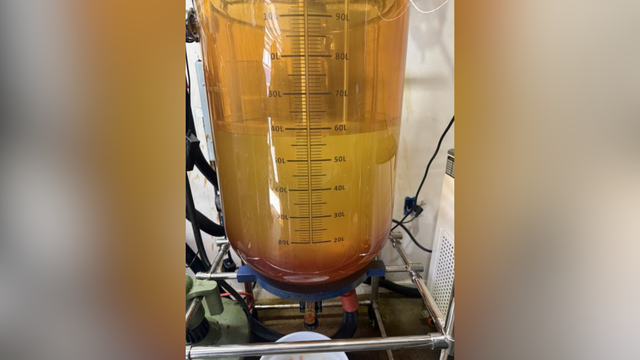
The clandestine lab was hidden in the basement of a house in the city’s residential area and was linked to a broader distribution network that the DEA and the East Baton Rouge Sheriff’s Office had been tracking for three months. Investigators described the operation as large‑scale and technically advanced, noting that it housed roughly $250,000 worth of professional‑grade apparatus. Among the equipment seized were temperature‑control devices, an industrial‑grade evaporator and a reactor vessel that held 58 liters of liquid, later confirmed to be etonitazene.
East Baton Rouge Sheriff Sid J. Gautreaux III called the bust “a first‑of‑its‑kind discovery for the DEA in the United States” in a statement, adding that the rise of drugs like nitazenes heightens the urgency of their mission to protect families from the harms of illegal substances.
Louisiana has emerged as a central hub for the nitazene threat. According to the Louisiana State Police Crime Laboratory, more than four‑fifths of all etonitazene samples seized by the DEA nationwide this year originated in the state. Earlier this year, the DEA warned that fentanyl is increasingly being combined with a “dangerous array of synthetic substances,” including nitazenes.
Journalist Jon Wertheim of 60 Minutes has been investigating these new, lethal synthetics for months. In the upcoming segment “One Molecule at a Time,” which airs on Sunday, Wertheim accompanies DEA agents on a raid and visits the agency’s Special Testing and Research Laboratory to examine the global supply chain of chemicals and the evolving chemistry that fuels cartels’ synthetic‑opioid production and distribution.
View Wertheim’s report on nitazenes and other synthetic opioids on Sunday’s episode of 60 Minutes.