
Congressional leaders are expressing alarm that the current administration is not doing enough to shield critical infrastructure from cyber attacks that leverage artificial intelligence, a concern highlighted in a bipartisan letter sent to the White House’s artificial‑intelligence coordinator.
The missive, signed by Senator Maria Cantwell of Washington, the senior Democrat on the Senate Commerce Committee, and Senator Mike Rounds of South Dakota, who chairs the Senate Armed Services Committee’s subcommittee on cybersecurity, calls on AI czar Jay Clayton to craft a fresh national strategy aimed at countering AI‑enhanced cyber threats.
“The pace at which AI can uncover and exploit software flaws is outstripping our defensive capabilities,” the senators wrote. They warned that AI tools can rapidly identify system weaknesses and bypass conventional security measures, while the process of testing and deploying patches for critical infrastructure can stretch over weeks or even months. They also noted that autonomous AI agents could create novel security challenges.
The White House did not immediately return a request for comment on Tuesday.
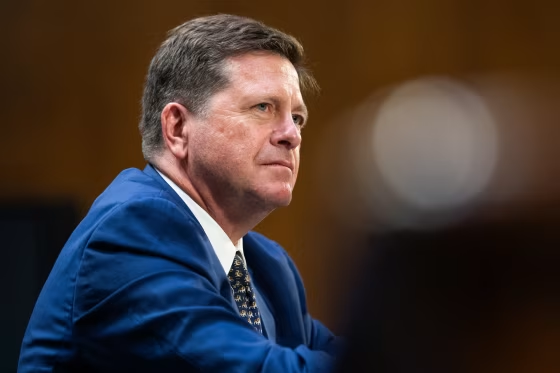
It remains uncertain how, if at all, AI has contributed to the recent series of outages that have affected U.S. consumers and travelers, but the issue is expected to surface when Clayton appears before the House Committee on Homeland Security on Wednesday morning. Clayton, who also serves as the Director of National Intelligence, was appointed to oversee AI policy in early October and is heading a task force tasked with delivering an AI strategy by the end of January.
In their letter, Cantwell and Rounds referenced a wave of cyber incidents in Japan that have struck banks and corporations, resulting in extensive data breaches that the Japanese government is now trying to contain. Analysts believe those attacks were amplified by AI tools. The senators also cited cases where unauthorized AI systems accessed customers’ bank accounts, prompting concerns that such technology could autonomously initiate financial transactions.
The lawmakers are urging Clayton’s task force to convene AI firms and federal agencies to fortify digital infrastructure and to establish security standards for self‑directing AI systems.
During a press briefing in the Philippines, Secretary of State Marco Rubio attempted to calm public fears, saying that recent disruptions—including problems with Microsoft Outlook, United Airlines and the Federal Aviation Administration—are unrelated. “We have no evidence or reason to suspect that any of these separate events are linked to malicious actors, hackers, criminal groups, foreign governments, or any other hostile entity,” he said.