
COP31 climate negotiations in Turkey fell apart on Sunday after the European Union and several other countries turned down a draft that omitted any reference to fossil fuels.
The talks in the seaside resort of Antalya collapsed two days after the United Nations’ COP31 summit was scheduled to conclude, as delegates from 196 nations and the EU failed to reach agreement on fresh climate‑action commitments and how to fulfill earlier pledges.
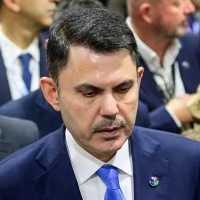
Murat Kurum, Turkey’s environment minister and host of the conference, announced on Sunday that a fourth draft would not be produced. “There’s nothing left to do. We have exhausted all possibilities,” he said, adding that he would not continue drafting a text in a setting where consensus was absent. He later expressed disappointment that the summit did not deliver a “much stronger outcome.”
Chris Bowen, the Australian minister who chaired the negotiations, told reporters that the parties had hit “unbridgeable red lines.” He described the pre‑COP situation as “the most complex and geopolitically charged environment in living memory,” noting that issues previously negotiable at earlier COPs had become non‑negotiable this time.
The latest 12‑page draft, released on Sunday, outlined suggested steps for nations to speed up climate action but was immediately criticised for omitting any mention of phasing out fossil fuels—a core demand of the EU and other states. Irish minister Darragh O’Brien, speaking for the EU delegation in Antalya, said the bloc “strongly objects” to the text, calling it a form of “greenwashing.” “These decisions fall far short of the ambition required to confront climate change,” he said. “It is unacceptable to have a climate pact that ignores fossil fuels entirely.”
Panama also rejected the proposal, arguing it did not go far enough, as did the Marshall Islands, a low‑lying Pacific nation threatened by rising seas. The United Kingdom’s delegation, represented by spokesperson Kate Hughes, described the draft as the “lowest common denominator.”
All participants needed to agree for the document to be adopted. The negotiations, which lasted longer than any previous COP—surpassing the delays at COP25 in Madrid—began on 9 November. An initial draft circulated a week later contained six references to “fossil fuel(s).” By Thursday, a second version had stripped all such mentions, sparking anger among many countries.
Although the summit formally ended on Friday without a deal, delegations continued informal talks in hopes of finding a compromise. The fourth draft released on Sunday still lacked any reference to fossil fuels. Nations such as Saudi Arabia, Russia and India opposed including the term, warning that a transition away from fossil fuels—central to their economies—could pose financial risks.
The United States, one of the world’s biggest greenhouse‑gas emitters, was absent from the conference, having withdrawn from a series of international climate commitments under former President Donald Trump.
The latest text began by “recalling the United Arab Emirates Consensus in its entirety,” a nod to COP28 in the UAE where, for the first time, parties agreed to “transition away” from fossil fuels in the energy sector.
Panama’s environment minister, Juan Carlos Navarro, accused the world of being “held hostage by the petroleum mafia.” “We love the oil industry,” he said at a Wednesday press briefing. “We can’t live without it, and they have convinced us they’re acting in our best interest.”
Mohamed Adow of Power Shift Africa labeled COP31 “the worst ever.” “The collapse of the talks in Antalya should serve as a wake‑up call,” he wrote in a statement. “Rich countries and polluting governments cannot keep showing up empty‑handed and expect a carefully worded declaration to absolve them.”
U.N. Secretary‑General António Guterres expressed “deep disappointment” that COP31 concluded without a shared outcome. “The lack of consensus in the negotiating room does not change the scientific reality,” he posted on X, adding that the goal of the 2015 Paris Agreement—to keep warming below 1.5 °C—will be missed.
The draft also acknowledged that the 1.5 °C target set at Paris is now out of reach, warning that exceeding that threshold will intensify extreme heat and other climate‑related hazards.
With the talks stalled, Kurum may either call a follow‑up session or postpone further decisions until next year’s conference in Ethiopia. The last time COP negotiations collapsed was at COP6 in The Hague in 2000.