
Washington – For months the Democratic Party has highlighted ending the war in Iran as a central promise to voters in the upcoming midterms, arguing that the conflict is driving up prices and that a congressional takeover would force President Trump to halt it.
With Democrats poised to secure solid majorities in both the House and the Senate next year, some lawmakers are looking at using the power of the purse as leverage, attaching conditions to must‑pass funding bills. Exactly when and how they intend to move remains uncertain.
Before the election, Rep. Rosa DeLauro of Connecticut told CBS News she would back “cutting off the money for the Iran war.” DeLauro, who is set to chair the influential House Appropriations Committee, noted that any funding must be approved by Congress. “If they want money, they have to get congressional approval,” she said.
The first opportunity to apply pressure could come within weeks, before Democrats formally assume control. Lawmakers must meet a Dec. 11 deadline to fund most federal agencies and avoid a shutdown. A number of Democrats have suggested refusing to pass any short‑term funding measure that does not limit money for the Iran conflict.
However, some senior House Democrats who will head key committees next year are pulling back from that stance, warning that it could trigger a shutdown. DeLauro, who is involved in the funding negotiations, favors a brief extension through February if a full‑year appropriations package is not in place by the deadline, and she said she does not support using a continuing resolution as a bargaining chip. “The American people want us to end the war,” she told reporters on Wednesday, “but I doubt they think a government shutdown will achieve that.”
Rep. Gregory Meeks of New York, who will chair the House Foreign Affairs Committee, told CBS News on Thursday that he would oppose a continuing resolution only if he believed a shutdown would help end the war. “I think it would just shut down services that Americans rely on,” he said.
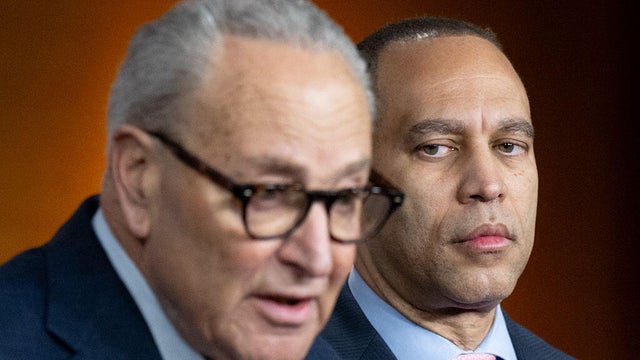
House and Senate leaders – Rep. Hakeem Jeffries and Sen. Chuck Schumer – have both voiced support for ending the Iran war but have not laid out a specific strategy, including whether they would attach language to a stopgap bill. Jeffries said Tuesday that the appropriations committees in both chambers are “actively discussing” funding options. “I don’t want to get ahead of that process,” he told reporters, adding that the “reckless and costly war of choice in Iran must end today.”
Sen. Chris Van Hollen of Maryland, who is challenging Schumer for the majority‑leader post, has urged the party to use the Dec. 11 deadline to force restrictions on the war. In a statement last week he said any funding agreement “must contain language that bars the Trump administration from using appropriated funds to continue his war against Iran.” The statement was co‑signed by Sen. Tammy Duckworth of Illinois, Sen. Bernie Sanders of Vermont and the more centrist Sen. Michael Bennet of Colorado.
Other senators, including Bennet, Duckworth, Sen. Elizabeth Warren of Massachusetts and Sen. Kirsten Gillibrand of New York, have said they will try to add amendments to any funding deal that would prohibit war funding until Congress authorizes the conflict. Senate Democrats discussed the issue in a closed‑door lunch on Tuesday; Van Hollen told reporters the conversation was “very productive,” but no final decision had been reached.
Reps. Yassamin Ansari of Arizona and Ro Khanna of California also said they would vote against any appropriations package that does not expressly forbid the use of funds for offensive operations in Iran.
Once Democrats take control of both chambers in January, they will have several chances to insert Iran‑war language into essential legislation, in addition to considering standalone bills and resolutions aimed at curbing the conflict. They will likely need to pass another funding extension and eventually raise the debt ceiling, and the appropriations process for fiscal year 2028 as well as the annual National Defense Authorization Act could serve as further leverage points.
Schumer told reporters earlier this month that “we are going to end the war,” noting that the Founding Fathers gave Congress the power of the purse as a check on a president who wages war without the people’s consent.
Nonetheless, preventing the president from conducting military action in Iran is expected to be difficult. “Forcing a president to stop using force is a complex task that requires political opportunity, savvy legislation and coordination, and it will cost a lot of political capital,” said Scott R. Anderson, a former State Department attorney and senior fellow at the Brookings Institution.
Trump has signaled that he will use his veto power aggressively, meaning Democrats would need a coalition of several Senate Republicans and dozens of House Republicans to override a veto. Moreover, presidents have traditionally claimed broad authority to direct the military. Trump did not seek congressional authorization for the Iran operation; instead, he issued a notice under the War Powers Resolution saying he acted under his constitutional authority as commander‑in‑chief. That 1973 law requires the president to notify Congress within 48 hours of hostilities and limits combat to 60 days, with a 30‑day withdrawal period, unless Congress passes an authorization of force. It also allows Congress to pass resolutions directing the president to end hostilities.
Democrats in both chambers have used the War Powers Resolution to vote for ending hostilities several times this year, sometimes with support from moderate or anti‑interventionist Republicans. A war‑powers resolution passed both houses in June, but the Trump administration dismissed the votes, arguing the resolution is unconstitutional. On Thursday the Senate rejected another House‑passed resolution, losing Republican backing for curbing Trump’s Iran policy.
Jeffries said Tuesday that House Democrats are debating whether to push for more war‑powers votes this year. “We’re looking at the tools we have,” he said, adding that early in the new Congress they intend to move aggressively to stop what he called the “reckless Republican war of choice in Iran.”
Later that day, speaking at the Atlantic Summit in Washington, Jeffries indicated that Democrats plan to vote next year on a resolution that would carry the force of law. The June resolution had been passed without requiring the president’s signature. Jeffries explained that the goal is to send a war‑powers resolution to Trump’s desk, essentially daring him to veto it. The war remains deeply unpopular with the public. “There’s nothing more powerful than putting that bill on the president’s desk,” he said.
Meeks told CBS News that starting in January he will introduce a war‑powers resolution, back legislation that cuts off war funding, and demand that the administration pursue genuine diplomacy by sending professional diplomats rather than the president’s personal contacts.
Other Democrats have also advocated using the appropriations process as leverage. Sen. Tim Kaine of Virginia recently said that if the administration ignores already‑passed war‑powers resolutions, “our only recourse is to use the appropriations process to block funding for war operations unless the president obtains the legally required congressional authorization.”
When asked about Democratic plans, a White House official told CBS News that, as President Trump and Secretary Rubio have said, the economic pressure campaign is already crippling Iran, leaving no need for major combat operations. The official added, “The Democrats continue to show they have no agenda to improve Americans’ lives, only baseless obstruction of the President’s agenda.”
Congress has a precedent for limiting presidential war powers. In 1973, both chambers passed legislation that barred funding for hostilities in Vietnam, Cambodia and Laos, which President Richard Nixon signed into law.
Anderson told CBS News that if lawmakers want to force an end to the Iran war, they could enact legislation that either outright bans hostilities or prohibits the use of federal funds for the conflict, or both. “You need a clear prohibition to stop the president from acting,” he said, “but even then there’s the question of whether the president will comply and how enforceable it is.”
What specific military actions Democrats might try to prohibit remains an open question. The United States has not launched large‑scale offensive operations against Iran in recent months, but the conflict has lingered at a low level, with occasional strikes after U.S. forces claim imminent threats, a naval blockade of Iranian ports and escort of commercial vessels through the Strait of Hormuz.
Anderson suggests Congress could try to bar the administration from resuming offensive bombings and could restrict the blockade, while likely leaving defensive actions untouched. He notes that past presidents have argued the Constitution gives them inherent authority to protect U.S. nationals, a claim President Gerald Ford used to evacuate Saigon and conduct other late‑Vietnam operations. “If you cut off all funding, what happens when U.S. ships in the Strait of Hormuz are attacked or American sailors are captured?” he asked.
Democrats have not yet laid out a public strategy for responding if the administration defies congressional limits. If they believe the executive is not complying with its obligations, the House or Senate could sue, though the outcome would be uncertain.
Rep. Adam Smith of Washington, who will chair the House Armed Services Committee, has suggested impeachment over the war could be an option. “How do we stop him? What law can we pass if he refuses to obey?” he said in a CNN interview before the election.
Smith told The New Republic that even if Democrats manage to block war funding, “the legal language and loopholes that Trump can exploit will continue to pose challenges.” “We’re entering uncharted territory,” he added.
Anderson believes Democrats are serious about imposing restrictions on the Iran war, but warns it will likely require multiple attempts, extensive political fighting and legal maneuvering. “People need to be patient,” he said. “There’s an expectation that a Democratic win will end the war tomorrow, but that’s not how it will happen.”