
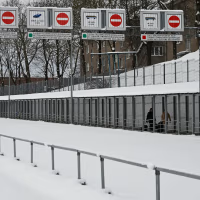
VILNIUS — The Estonian government announced on Friday that it will suspend all road border crossings with Russia for at least half a year, citing security concerns. The shutdown is scheduled to start on 1 December and is expected to limit Moscow’s capacity to stage further attacks.
The decision follows accusations made by Estonia, a NATO and EU member, on Sunday that Russian security services were behind an attempted arson at an Estonian defence firm – the second such incident reported this year.
Interior Minister Igor Taro explained at a press briefing that the closure is intended to improve the overall security environment and curb Russian attempts to intimidate and recruit people passing through Estonian checkpoints. “We can no longer accept the pressure and recruitment efforts directed at our citizens at the border,” he said.
The Kremlin has rejected any role in the weekend arson attempt. Foreign Ministry spokeswoman Maria Zakharova warned that if Estonia proceeds with the border shutdown, Russia will take political and diplomatic actions in response. “These steps amount to building a new Iron Curtain under the pretext of an imagined eastern threat,” she said.
Estonia, a staunch supporter of Ukraine, currently operates five road crossing points with Russia. Its northern neighbour Finland closed its own border with Russia in 2023 and has kept it shut since then, while Latvia and Lithuania to the south have left their crossings open.
The border area remains a vital link for many families with ties on both sides, a legacy of the Soviet era. The Narva crossing, located in a predominantly Russian‑speaking city on the Estonian side, also serves travelers from other parts of Europe heading to St Petersburg, a few hours away by car.
According to Estonian police statistics, about 760 000 people used the Estonia‑Russia border this year: roughly 307 000 were Russian nationals, 175 000 were Estonian citizens and 54 000 held Finnish passports.
Rail freight will continue to operate, although it will still be subject to stringent customs inspections, the Estonian authorities said.