
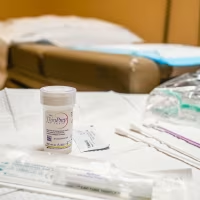
Federal officials are preparing to shift cervical‑cancer screening for women aged 30 to 65 from the traditional Pap smear to a test that detects human papillomavirus (HPV). The new guidance also would allow women to collect their own HPV sample, a departure from the current U.S. Preventive Services Task Force (USPSTF) recommendations that could affect millions of patients.
Cervical cancer is largely preventable, yet recent data suggest the United States is losing ground in early detection. HPV, the virus responsible for almost all cases of cervical cancer, is the most common sexually transmitted infection.
The proposal, which has not yet been finalized, emerged on Friday when USPSTF members voted in a closed‑door session at the end of a two‑day meeting, according to a source who asked to remain anonymous because they are not cleared to speak publicly.
Although the task force is an independent panel composed mainly of primary‑care physicians, its recommendations carry weight because the Affordable Care Act requires most private insurers to cover services the panel endorses without charging patients.
A USPSTF spokesperson declined to comment.
Previously, the panel advised women 30 to 65 that they could choose any of three strategies: a Pap test every three years, an HPV test every five years, or a combination of both every five years. For women 21 to 29, the recommendation remains a Pap test every three years.
Dr. Sangini Sheth, an associate professor of obstetrics, gynecology and reproductive sciences at Yale School of Medicine, said allowing self‑collection could broaden access to screening. “Self‑collection is especially helpful for people who find a speculum exam difficult, and it lets us bring screening to settings like mobile clinics, stand‑alone labs, or specialty offices where pelvic exams aren’t routine,” she explained.
Robert Smith, a cancer epidemiologist and senior vice‑president for early cancer detection at the American Cancer Society, added that a self‑taken sample is easy to obtain and matches the accuracy of a clinician‑collected one.
For decades, doctors have relied on the Pap test, which looks for abnormal or precancerous cervical cells. An HPV test instead detects high‑risk viral strains, often before cellular changes appear, permitting longer intervals between screenings.
A 2018 study in the Journal of the American Medical Association, which followed more than 19,000 participants, found that HPV testing identifies precancerous lesions earlier and more reliably than Pap testing.
Smith noted that many women delay Pap smears because they find the procedure uncomfortable or invasive, particularly when performed by a male provider. The self‑administered HPV test uses a simple vaginal swab rather than a speculum, making it generally more tolerable. “We anticipate that this option will boost screening rates,” he said.
While many clinicians currently order both tests together, Sheth emphasized that the HPV component provides the majority of the benefit. She said Pap smears alone miss a substantial proportion of abnormalities, detecting only about half to two‑thirds of cases. Women who forgo HPV testing are far more likely to have an HPV‑related issue go unnoticed. “There’s essentially no downside to skipping the Pap in favor of HPV testing,” she remarked. Smith echoed the sentiment, calling the HPV test “superior to cost‑testing.”
USPSTF recommendations become official once they are published, but the timeline for that release is uncertain. It is also unclear whether Health Secretary Robert F. Kennedy Jr. will need to sign off on the guidance or modify it after a Supreme Court decision last year affirmed his authority over the panel. That case, brought by a Christian‑owned company objecting to coverage of an HIV‑prevention drug, confirmed that the secretary can replace panel members and review their advice.
In September, Kennedy reshaped the task force, appointing eight new members, some of whom hold stock in firms that produce drugs and other products affected by the panel’s rulings, according to documents obtained by The New York Times. NBC News has not independently verified those documents. Thursday’s meeting was the panel’s first in more than a year.
A Department of Health and Human Services spokesperson did not immediately respond to a request for comment.
Smith said the USPSTF’s move brings its guidance closer to the American Cancer Society’s recommendations, which have favored HPV testing since 2020. However, differences remain: the cancer society advises beginning HPV screening at age 25, whereas the USPSTF still recommends Pap tests starting at 21 and switching to HPV testing at 30. Moreover, for self‑collected samples the cancer society suggests a three‑year interval rather than five, pending longer‑term data, Smith explained.
The task force also clarified that women may stop screening at age 65 only if they have had several consecutive negative results over the past ten years; otherwise, continued screening is advised.
The American College of Obstetricians and Gynecologists issued a statement saying it is “monitoring the USPSTF process to amend cervical cancer screening recommendations and will evaluate the final proposed changes when available.”