
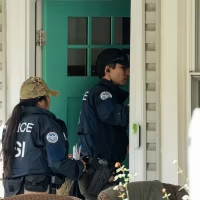
A federal judge released more than 160 pages of court filings on Monday night that relate to the warrant authorizing a federal raid on Rep. Ilhan Omar’s residence in Washington, D.C. Chief U.S. District Judge James E. Boasberg approved the partial release after a coalition of news outlets, including NBCUniversal News Group, petitioned for the sealed records. The actual search warrant itself remained under seal.
Boasberg sided with the Justice Department in keeping the bulk of the material confidential, but he ordered that the exchange concerning Omar’s “speech or debate” immunity—a constitutional protection that bars criminal or civil liability for legislators acting in their official capacity—be made public. Roughly half of the pages are heavily redacted, yet the unredacted sections reveal how a magistrate judge sought to verify that the Trump administration was complying with proper procedures when searching a member of Congress.
Magistrate Judge Matthew Sharbaugh repeatedly asked the Justice Department for briefings on its probable‑cause theory, and the department indicated that the affidavit had undergone “several rounds” of revision. Sharbaugh eventually concluded that the speech‑or‑debate clause was at least partially applicable because the search targeted Omar’s home, prompting the use of “special search procedures” at the residence, according to the newly released documents.
The inventory of items the government intended to confiscate is largely blacked out, and the list of what was actually taken is completely redacted. The portions that are readable state that the seizure would include “all records and information that constitute fruits, contraband, evidence, and instrumentalities of violations of (REDACTED).” The filing also mentions plans to seize papers, photographs, documents, thumb drives, external hard drives, computers or any other electronic media containing such material, as well as cell phones and any digital device owned, used or controlled by Omar that might hold evidence of wrongdoing. Omar has said that agents removed 17 items from her home, among them older phones she said belonged to her and one of her daughters.
The unsealed filings further indicate that the government believes the alleged violations span from 1980 to the present—well before Omar, who was born in October 1982, entered Congress. A filing submitted by Associate Deputy Attorney General Alessandra Serano reads, “The United States believes ILHAN has committed (REDACTED) crimes over decades — beginning long before she was ever in Congress,” and adds, “Nothing in the search warrant affidavit, briefing, or oral argument indicates that the United States’s case has anything to do with ILHAN’s professional life.” Omar’s office did not immediately respond to a request for comment on the released material.
The raid took place in October, only weeks after the midterm elections, an unusual move against a sitting lawmaker who was seeking re‑election. While the Justice Department has not disclosed the specific charges, sources familiar with the investigation told NBC News that they involve possible immigration‑related offenses. Omar, a naturalized citizen who arrived in the United States from Somalia as a child, described the search as “an attempt to target political enemies and weaponize federal law enforcement.” President Donald Trump, who has repeatedly criticized Omar and Somali immigrants and whose rallies have sometimes featured chants of “lock her up,” has denied any involvement in the search.