
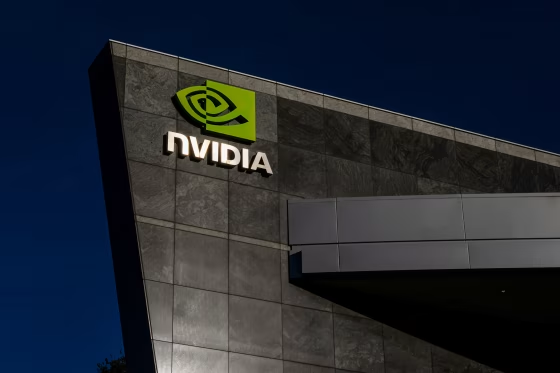
A coalition of fifteen specialists in national security and artificial‑intelligence policy has written to Attorney General Todd Blanche, urging the Justice Department to examine what Nvidia may have known about the alleged diversion of its high‑performance AI chips to China and whether the company kept selling to customers after evidence of illegal routing surfaced. The signatories ask the department to determine if Nvidia continued to supply chips to end‑users or intermediaries while being aware that the hardware was being smuggled, or if the firm “deliberately turned a blind eye to export‑control breaches.”
The letter stresses that the United States possesses the world’s most sophisticated silicon‑intelligence (SI) chip technology, much of it produced by Nvidia, and warns that illicit transfer operations could erode that advantage by giving China the hardware needed to advance its own AI systems and bolster its military and geopolitical reach. Among the fifteen signatories are former CIA inspector general David Buckley, retired Army General Randy Manner, former Biden‑administration chip adviser Chris McGuire, and Brad Carson, president of the advocacy group Americans for Responsible Innovation, which coordinated the appeal.
Carson told NBC News that Chinese interests and other global competitors are eager to acquire America’s cutting‑edge AI chips, adding that Nvidia’s products sit at the top of their wish lists. Nvidia declined to comment when approached for a statement. On the same day the letter was sent, the company’s board announced the creation of a new committee to review national‑security and export‑control compliance matters.
A Justice Department spokesperson replied that, as a matter of policy, the agency does not comment on the specifics or existence of ongoing investigations, but affirmed that any probe would be grounded in evidence and facts. The request arrives as congressional leaders intensify scrutiny of Nvidia and press for a deeper look into the company’s awareness of where its chips end up and whether it acted on any smuggling warnings.
Earlier this week the Justice and Commerce departments disclosed details of a probe into Megaspeed, a Singapore‑based firm linked to a suspected Chinese intelligence operative named Alice Huang. Allegations have surfaced that Jensen Huang, Nvidia’s former chief executive, had a personal relationship with Megaspeed’s Huang. Investigators say Megaspeed purchased billions of dollars’ worth of Nvidia chips and is under examination for allegedly funneling the components to China.
In a joint statement, the agencies said the Commerce Department opened its inquiry into Megaspeed in 2024, sought Nvidia’s sales records in May 2025, and placed Megaspeed on a “no‑sell” list the following month. Commerce investigators also conducted an on‑site inspection of Megaspeed’s facilities with Singaporean law‑enforcement officials in June 2025. A source familiar with the matter indicated that Nvidia itself is not currently the focus of any national‑security investigation. The Justice Department, however, has taken the lead on the criminal aspect of the case, and the two agencies said they will continue to cooperate on any unlawful conduct that may be uncovered.
Republican members of several House committees with a national‑security focus have scheduled an interview with Jensen Huang for Dec. 1, during which they intend to probe his possible role in a “potential breach of our national security,” according to the lawmakers.
The Tuesday letter also references a series of smuggling cases the Justice Department has pursued over the past year involving Nvidia hardware. In March 2026, prosecutors charged three individuals in a scheme where a Southeast‑Asian middleman bought roughly $2.5 billion in servers equipped with advanced AI chips, with at least $510 million of those chips allegedly shipped illegally to China. The letter argues that the repeated attempts to move Nvidia chips to China suggest a pattern that merits a thorough review of the company’s practices and its response to repeated red‑flag warnings.
Analysts estimate that smuggled chips account for at least a quarter of the AI hardware Chinese firms have obtained through legitimate channels, though the true proportion could be higher. Major Chinese technology companies, including Alibaba and Tencent, are reported to have leased chips from data‑center operators in Singapore, Malaysia and other Southeast‑Asian nations.
This week Commerce Secretary Howard Lutnick and the Bureau of Industry and Security announced new regulations aimed at closing that loophole. The rules will restrict foreign data‑center operators from renting chips to Chinese customers and impose additional requirements on chip purchasers in five Southeast‑Asian countries—among them Singapore and Malaysia—who wish to receive products from U.S. firms such as Nvidia and AMD. Beijing condemned the measures, with foreign‑ministry spokesperson Guo Jiakun asserting that they violate agreements, harm Chinese enterprises’ legitimate interests and destabilize global supply chains.
Nvidia’s most advanced AI chips are widely regarded as the most powerful on the market. Current export controls prohibit the sale of those top‑tier chips to China, although older‑generation models from the H200 family may still be sold if a 25 percent fee, collected by the White House, is applied.
In early November, the Justice Department created the Super‑Intelligence Task Force, a unit dedicated to preventing foreign state actors, transnational criminal groups, and individual or corporate offenders from compromising America’s leadership in silicon‑intelligence through fraud or other illegal activity. Some members of Congress have called for tighter export rules on advanced AI chips, with the House Select Committee on China pushing for restrictions on chip‑making equipment sales and stronger tracking mechanisms to ensure that chips shipped to overseas data centers remain outside mainland China.
The letter concludes by urging the Justice Department to pursue the evidence wherever it leads and to take appropriate enforcement action if violations are confirmed.