
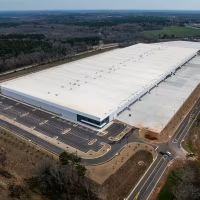
A government watchdog has found that Immigration and Customs Enforcement has been paying roughly $13 million each month for unused beds in five newly acquired detention centers, and that it overpaid by more than half for nine large warehouse properties—most of which the agency is now trying to sell.
The review shows that ICE has spent over $1 billion of taxpayer money on these warehouses, and that three of them were bought for more than three times their assessed values. In Michigan, the agency purchased a warehouse for just over $34 million, a price the Government Accountability Office says is almost five times what the property was officially valued at.
ICE did not reply to NBC News’ request for comment. In a response to the GAO, the agency accepted the watchdog’s suggestions that it should keep its spending plans current and fully assess the cost of any detention facility before making a purchase. In a letter to the GAO, the Department of Homeland Security said the department “remains committed to ICE strengthening the necessary processes, policies, procedures, and safeguards to ensure the continual oversight and management of ICE’s financial resources as it carries out its mission.”
About a year ago, ICE began looking into buying massive, empty warehouses that could hold up to 8,000 detainees each. The proposal quickly ran into opposition from local officials, immigrant‑rights groups and some Republican members of Congress. One planned warehouse in the Atlanta suburb of Social Circle, Georgia, prompted a lawsuit after town leaders warned that the facility would overwhelm the municipal sewage system, leading to “dry taps and raw human waste spills.” Private‑prison contractors also voiced concerns about housing more than 1,500 detainees in a single location.
The effort was put on hold after former Homeland Security Secretary Kristi Noem left the agency in late March, and at least seven of the warehouses are now listed for sale, according to the GAO report. The report’s authors described the warehouse program as a “major investment that was implemented rapidly and will likely result in significant waste.”
ICE has roughly doubled the number of detention sites it operates, but it is now dealing with a staffing shortfall: 55 of the 87 positions needed to oversee and manage those facilities are vacant. The GAO found that, on average, ICE paid for more than 9,000 empty beds each day under contracts that guarantee payment regardless of occupancy.
The agency’s push for new detention capacity began after the July 2025 passage of President Donald Trump’s “big beautiful bill,” which allocated $45 billion to ICE through 2029. ICE has also come under fire for spending $495 million on a former prison in western Minnesota—a price that came a year after the property’s owner offered to sell the same facility to the state for $75 million, according to documents obtained by KARE 11.
Democrats on the House Homeland Security Committee sent a letter to the Department of Homeland Security on Friday requesting documents related to that Minnesota sale.