
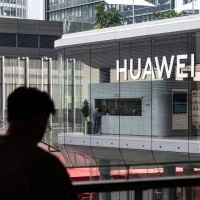
Huawei, the Chinese telecommunications giant, was found guilty on several federal counts in a New York federal court on Tuesday. Prosecutors said the firm had stolen technology from U.S. companies, misused the American banking system and aided Iranian surveillance of its own citizens.
A jury in the Eastern District of New York returned guilty verdicts on seven conspiracy charges that covered bank fraud, wire fraud, money‑laundering, defrauding the United States and a plot to pilfer trade secrets. In addition, the company was convicted of separate bank‑fraud and wire‑fraud counts. It was cleared of two other accusations: a racketeering conspiracy and a conspiracy to obstruct justice.
Huawei responded that the accusations lack any legal or factual basis, and it said it “welcomes” the jury’s decision on the racketeering charge. “We will carefully examine the verdicts and pursue every legal remedy to protect our rights and interests,” the company said in a statement.
Attorney Brian Heberling, representing Huawei, said the firm intends to appeal the convictions. Sentencing is set for September 14, at which point the company could be hit with substantial fines and other sanctions.
According to the government, Huawei – a maker of smartphones and operator of global telecom networks – encouraged its roughly 200,000 employees in 170 countries to engage in deceit and theft to gain a competitive edge. Prosecutors said the firm misappropriated a range of intellectual property, including source code, router user manuals, antenna designs and robot‑testing technology. The alleged victims included Cisco Systems, Motorola Solutions, T‑Mobile, Quintel USA and Fujitsu, as reported by the Associated Press.
In an interview on Tuesday, Heberling dismissed the government’s case as a “caricature‑like portrait” of Huawei, portraying the company as a corrupt entity whose policies allegedly condoned criminal conduct. He said that view was “deeply at odds with my experience of the company and, more importantly, with the evidence, which shows only a handful of isolated incidents over two decades. No corporation can guarantee flawless conduct over that span of time.” He added that the acquittal on the racketeering charge – the most serious allegation faced – signaled a clear rejection of the narrative the United States had pursued.
Huawei has previously been barred from selling equipment to U.S. carriers over national‑security concerns, and it remains on export blacklists in several Western nations, including Canada and the United Kingdom, according to the Associated Press.