
Last week, while touring the rodeo held at the Louisiana State Penitentiary—commonly called Angola—60 Minutes correspondent Sebastian Junger met several inmates whose convictions were secured by juries that did not reach a unanimous decision.
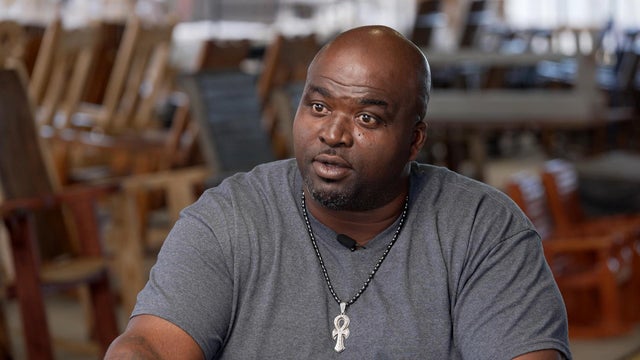
One of those men is Kenny Palmer, known inside the prison as “300.” He spends his time at the rodeo crafting chess boards, wooden jewelry and other handmade items, which he sells to visitors. Palmer hopes to use some of the earnings to support his niece.
Nearly two decades ago, Palmer was given a life‑without‑parole sentence for a homicide that occurred during a drug transaction. At his trial the jury voted 10‑2, with two jurors—one Black woman and an elderly White woman—marking not guilty. Under a Louisiana statute that was then in force, a conviction could stand even without unanimity.
“The only Black woman on the panel and the older White lady both voted not guilty,” Palmer told Junger. He argued that the allowance for split‑jury verdicts gives prosecutors an unfair edge. “You can still be found guilty despite reasonable doubt. I should either get a new trial or a plea deal,” he said.
Palmer likened the non‑unanimous system to “taking on a ten‑thousand‑pound silverback gorilla on steroids,” adding, “Seriously, how does anyone win?”
The practice of allowing juries to convict without unanimity dates back to the 1880s and was designed to dilute Black influence in the courtroom. It was codified in the 1898 Louisiana Constitution during a convention that explicitly sought to cement white supremacy in the state.
In 2020 the U.S. Supreme Court ruled that such non‑unanimous convictions violate the Constitution. At that time only Oregon and Louisiana still permitted split‑jury verdicts. The high court left it to each state to decide whether the decision should apply retroactively. Oregon chose to apply it retroactively, overturning hundreds of convictions, while Louisiana opted not to.
John Corley, another Angola inmate serving life without parole for second‑degree murder, explained his situation to Junger. “I was convicted by a ten‑two jury. If the case were tried today, I wouldn’t be convicted—such a verdict would be illegal now,” he said. After the Supreme Court’s decision, the Louisiana Supreme Court deferred the question of retroactivity to the state legislature. Corley said political inertia and partisan gridlock have prevented any legislative remedy.
According to the Promise of Justice Initiative, roughly 800 people remain incarcerated in Louisiana on convictions that were obtained by non‑unanimous juries.
Palmer has become an activist for those prisoners, working with the 10‑2 Committee for Equal Justice. When Junger asked what he is fighting for, Palmer replied, “Getting out of here—that’s why I consider myself a freedom fighter.” He noted that many of the men he represents have spent three, four or five decades behind bars because of the old law, and that Louisiana is the only state in the nation still enforcing non‑unanimous jury verdicts. “All we’re asking for is the same constitutional protection that everyone else enjoys,” he said.
The accompanying video was produced by Will Croxton and Nelson Ryland, edited by Ryland, with reporting by Laura Dodd, Grace Conley and Sebastian Junger.