
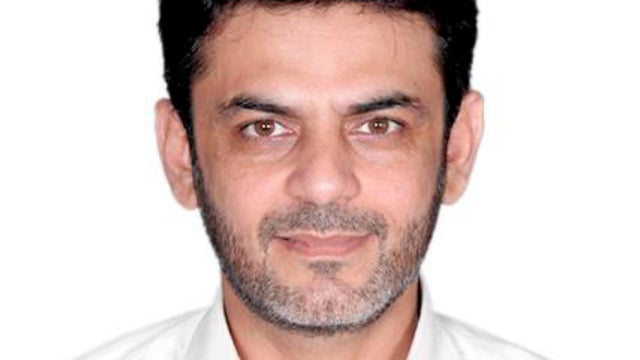
A Pakistani national, Asif Merchant, received a 27½‑year federal prison term on Tuesday after being found guilty of attempting terrorism and orchestrating a murder‑for‑hire scheme allegedly directed by Iran’s Revolutionary Guard Corps. The plot, according to prosecutors, targeted President Donald Trump, former President Joe Biden and, as Merchant later testified, former U.N. ambassador Nikki Haley.
Merchant was convicted in March, shortly after the conflict with Iran began, on charges of terrorism and murder‑for‑hire that carried a possible life sentence. He entered the courtroom with a solemn demeanor, his ankles shackled, and wore a tan prison jumpsuit. While the proceedings were translated into Urdu through headphones, he watched the judge closely, shifting in his seat as the verdict was read.
“This was an extraordinarily grave offense, an extreme form of terroristic violence,” said U.S. District Judge Eric R. Komitee of Brooklyn, a Trump appointee. “The intentional killing of a U.S. president or other officials ranks among the most serious crimes.” He added that the Iranian connection was an aggravating factor, noting Iran’s status as the world’s largest state sponsor of terrorism and emphasizing that the conduct was not an isolated incident for that foreign actor.
According to court filings, Merchant traveled to the United States to enlist criminal collaborators and contract assassins. The alleged scheme involved killing a political figure, stealing documents from the victim’s residence, and staging a protest to serve as a diversion after the murder. He faced one count of attempting an act of terrorism that crossed national borders and one count of murder‑for‑hire.
During the trial, Merchant testified in his own defense, acknowledging that a member of the Revolutionary Guard had recruited him. He said the plan also considered Trump, Biden and Haley as possible targets. To move the plot forward, he contacted a U.S. associate who turned out to be a confidential informant working with law enforcement. That informant, identified in court as “Nadeem Ali,” introduced Merchant to two men who were actually undercover FBI agents. Merchant paid each of them $5,000 as an initial fee for the assassinations.
Merchant claimed he acted under duress, fearing that his wife and child in Iran would be harmed if he refused. He also has a wife and children in Pakistan. Prosecutors rejected the duress argument, saying there was no evidence that his relatives were in danger. Iran has denied any involvement in plots to kill Trump or other senior U.S. officials.
In sentencing, Komitee said the record showed Merchant was “highly motivated to inflict harm on this country.” While acknowledging the possibility that Merchant was concerned for his family’s safety, the judge did not accept the defense’s contention that this was his sole motivation.
The government highlighted Merchant’s own social‑media activity, including a post depicting Trump’s severed head with the captions “coming soon” and “severe revenge.” Trial exhibits also revealed that Merchant had searched online for Trump rally locations in 2024 and had looked up at least one rally address on Google Maps.
To conceal the operation, Merchant established a clothing‑related business and used garment terms as code. He instructed the informant that “T‑shirt” signified a protest, “flannel shirt” meant theft, and “fleece jacket” referred to carrying out the murder. Merchant’s attorney, Christopher Neff, argued that the business was legitimate, not a front. The prosecution, however, presented a video in which Merchant told Ali that the purpose was not profit but “money laundering for the IRGC murder plot.”
Neff told the judge that the scheme was unlikely to succeed because the IRGC had tasked Merchant with killing a protected political figure while providing him with minimal resources. “Mr. Merchant is not the monster the government portrays,” Neff said. “He is an ordinary person.” The government countered that the plot was realistic and consistent with IRGC tactics.
Merchant was taken into custody on July 12, 2024, the day before an attempted assassination of Trump at a rally in Butler, Pennsylvania. When informed of that incident, he reportedly said the event was “the same thing he was sent here to do.”
At the conclusion of sentencing, Komitee offered a brief statement of humanity, noting that even the gravest crimes should not define a person entirely. Attorney General Todd Blanche issued a statement after the sentencing, declaring that the Justice Department will not tolerate foreign terrorist schemes against U.S. leaders and will pursue those responsible.
After leaving the courtroom, Neff told reporters that while the defense plans to appeal and is disappointed with the length of the sentence, they appreciate that Judge Komitee did not impose the maximum penalty sought by prosecutors. When asked about a Trump‑appointed judge refraining from a life sentence for a plot that could have targeted the president, Neff replied that it demonstrated the continued independence of the judiciary.