
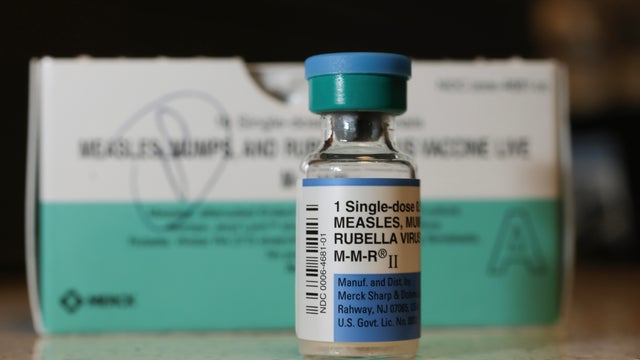
Pennsylvania announced on Monday that a ninth person has died from measles this year, as the outbreak across the United States climbs to levels not seen in decades. The fatality occurred in Centre County, roughly in the middle of the state, but the state health department did not release any additional details about the individual. The notice arrived just three days after Virginia reported the death of a child under five who had tested positive for measles, marking that state’s first measles‑related fatality of the year, according to its health officials.
With more than 1,600 cases reported, Pennsylvania now has the nation’s largest measles outbreak, according to the state Department of Health. The deaths represent the first measles fatalities in the Keystone State in 35 years. In Lancaster County, a mother told CBS News that all three of her children have contracted the disease.
The United States had been declared free of endemic measles in 2000, but that status was revoked last week. The World Health Organization defines elimination as the absence of continuous, locally transmitted measles for a period of 12 months or longer. CDC data indicate that roughly 25 % of this year’s cases stem from outbreaks that began in 2025, when the country recorded a 30‑year high of 2,289 infections, and that the virus has continued to spread. As of the previous week, the CDC counted 5,838 confirmed measles cases nationwide for the current year.
Dr. Evan Shirey, an infectious‑disease specialist, said his practice has gone from seeing no measles patients to encountering them almost daily. He attributes the surge largely to misinformation that fuels vaccine hesitancy. “The consequences can be heartbreaking,” he said. “Kids struggling to breathe, children disoriented and unable to recognize their own mothers.”
Robert F. Kennedy Jr., the secretary of the Department of Health and Human Services, who has faced criticism for questioning vaccine safety, reiterated his support for the MMR shot after the United States lost its elimination status, stating, “I continue to recommend the MMR vaccine as the most effective protection against measles.”
Vaccination coverage among kindergarteners has slipped below the 95 % threshold needed to safeguard both immunocompromised children and infants too young to be vaccinated. Dr. Shirey’s own son is three months old. “I’m counting the days until I can get him vaccinated,” he told CBS News, adding that he plans to have his child immunized as soon as the schedule permits. The first dose of the measles‑mumps‑rubella vaccine is normally administered between 12 and 15 months of age, though it can be given as early as six months for children at high risk during an outbreak.