
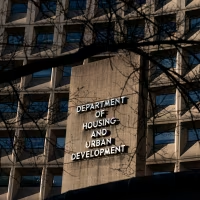
Twenty‑one states, together with Pennsylvania’s governor, have filed a lawsuit against the U.S. Department of Housing and Urban Development over a new regulation that would bar families from receiving federal housing assistance if any member of the household does not have an eligible citizenship or immigration status.
The plaintiffs argue that the rule could force families apart and result in the removal of U.S. citizens from public housing. Among the states joining the action are California, New York, Arizona and Massachusetts. HUD, for its part, says the regulation is needed because undocumented immigrants are exploiting the existing eligibility criteria.
The regulation is slated to take effect on Dec. 14. It would make it mandatory for applicants to prove either citizenship or a qualifying immigration status in order to qualify for federal housing aid.
“Children should not be displaced because of a parent’s immigration situation,” said California Attorney General Rob Bonta at a news briefing. “This policy is inhumane and illegal.”
For more than thirty years, Congress has allowed a proportional amount of federal housing assistance to be provided to families in which members have differing immigration statuses. Under that framework, assistance is reduced in proportion to the share of household members who are ineligible. The proposed rule would instead eliminate all assistance for such mixed‑status households.
Bonta illustrated the impact, saying, “Imagine a mother and two children who are all U.S. citizens living in public housing, while the father is ineligible. Under this rule, the entire family would lose its home.”
He noted that roughly 20 percent of children in California belong to mixed‑status families and estimated that about 7,000 households in the state could be affected. The rule would also require public housing agencies and private landlords to report tenants who fail the verification process to the Department of Homeland Security.
“Congress never authorized HUD to evict mixed‑status families or turn private landlords into immigration enforcers, yet that is precisely what this regulation does,” Bonta added.
The policy is the latest in a series of actions taken by the Trump administration aimed at tightening restrictions on legal immigrants, including cuts to health care, nutrition programs and other subsidies, as well as the removal of certain legal protections that could increase the number of people subject to deportation.
HUD Secretary Scott Turner first announced the proposal in January, and the agency issued the final rule last week.
In a statement sent by email on Monday, Turner said, “The final rule implements the 1980 Housing and Community Development Act and stops the misuse of taxpayer funds. It ensures that only U.S. citizens and certain qualified non‑citizens will occupy HUD‑funded housing. This adjustment redirects up to $218 million to eligible Americans currently on waiting lists.”
Earlier this year, HUD, in partnership with DHS, conducted an audit that identified about 20,000 mixed‑status households receiving federally funded housing assistance across the country. The department claimed that undocumented immigrants were taking advantage of “loopholes” to obtain benefits while HUD continued to grapple with a shortage of housing for those in need.