
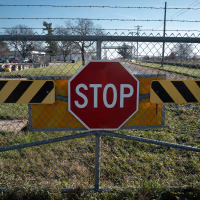
Army plans to blow up a cache of lead‑azide explosives in southeast Iowa, a move officials say is the safest option even though the blast is expected to spread toxic dust for many miles.
The controlled detonation is set for 9 a.m. Central Time on Wednesday at the Iowa Army Ammunition Plant in Middletown. According to the Army, 68 drums—roughly 9,700 pounds—of deteriorating lead azide have been “recrystallized,” a condition that could trigger a spontaneous explosion.
Authorities have ordered an evacuation of Middletown and a five‑mile radius to the plant’s southwest. Soldiers went door‑to‑door on Tuesday afternoon to inform residents they must leave, and the Federal Emergency Management Agency is providing short‑term hotel accommodations for those in the zone through Friday.
Based on the forecast for Wednesday, the Army estimates that a plume of lead‑laden dust could travel about 100 miles to the southwest, potentially reaching northeastern Missouri.
Local residents have expressed alarm and frustration, saying they received insufficient warning. Many people in the projected path have rushed to alter Thanksgiving plans, seal windows, protect gardens and stock up on cleaning supplies.
Jill Holler, who runs a family farm about 20 miles west of Middletown, said she spent Sunday night hurriedly collecting soil samples for future comparison of lead levels.
“I was out in the dark taking those samples, and it’s just exasperating,” she said.
Lead is a powerful neurotoxin; no exposure level is considered safe, and children are especially vulnerable. Health effects linked to lead include learning difficulties, reproductive problems, mental‑health issues and an elevated risk of hearing loss. Once deposited on the ground, lead particles can persist indefinitely unless physically removed.
The Army argues that a planned blast with mitigation measures is less risky than the possibility of an uncontrolled explosion. Outgoing Iowa Governor Kim Reynolds echoed that sentiment in a Tuesday statement, noting she has declared a disaster emergency for three counties that could be affected.
“I take the Army’s warning seriously; the choice is between a scheduled detonation and an accidental blast,” Reynolds said. “Given the information I have, the danger is immediate, and I trust the Army to do everything possible to protect those who might be impacted.”
To limit the spread of dust, officials have erected two layers of HESCO barriers—sand‑filled, collapsible walls—around the blast site and plan to spray water during the explosion to capture fine particles. Additional measures include aqueous foam blocks, gel blocks and two “water walls” composed of four 16,000‑gallon tanks each, intended to absorb the blast’s energy.
Environmental‑permit filings with the EPA indicate the explosion will leave a crater roughly 38 feet wide and five feet deep. After the blast, monitoring teams will track the plume, collecting soil, surface‑water and wipe samples to compare lead concentrations with baseline models and guide any localized cleanup.
If testing shows residential properties exceed 200 parts per million of lead, the Army says remediation crews will excavate contaminated soil, clean surfaces and restore the sites at full government expense. The agency has offered few details about the timing or methodology of that testing or the subsequent cleanup.
Andrew Whelton, a professor of civil, environmental and ecological engineering at Purdue University, noted that the emergency‑permit documents do not spell out an evidence‑based plan for determining the safety of homes, schools and businesses after the detonation.
“From what I’ve seen, there’s no clear strategy for assessing whether those locations are safe post‑blast,” he said.
Peter Thorne, a pulmonary toxicologist with the University of Iowa College of Public Health, said independent scientists will monitor the dust plume.
“We have equipment in place that will measure how much lead becomes airborne and where the wind carries it,” Thorne explained. “Our models will estimate deposition on soil, playgrounds and other surfaces, allowing us to gauge the level of risk from exposure.”
Thorne also questioned how the explosives became so hazardous. The nation’s supply of lead azide—once used in bomb triggers and phased out about 15 years ago—was transferred to the Middletown plant in 2009, officials said.
“Why wasn’t this dealt with earlier when the material could have been chemically degraded and no longer posed a hazard?” he asked. “It should have been addressed years ago; now we’re left with a crisis and few good options.”