
The U.S. Army plans to blow up a cache of deteriorating explosives at the Iowa Army Ammunition Plant on Wednesday morning, despite objections from local residents and a recent legal challenge that delayed the operation.
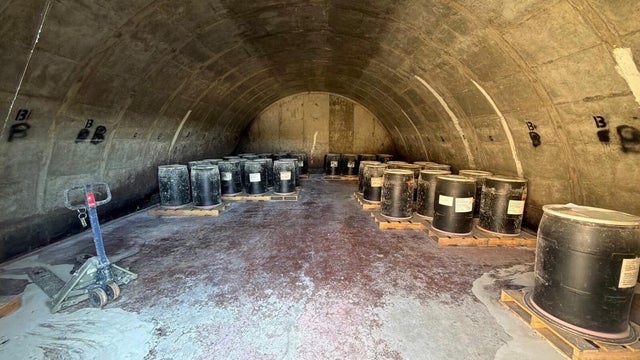
About five tons of highly unstable material that contains lead azide will be detonated at 9 a.m. in Middletown, a tiny town of roughly 350 people situated about four hours west of Chicago. The plant stores roughly 68 barrels—around 10,000 pounds—of lead azide, a compound that has been used in munitions since the First World War. According to the Environmental Protection Agency, the substance has been breaking down over two decades, undergoing recrystallization that makes it far more prone to accidental ignition from friction or movement.
The Army argues that a controlled blast is necessary to avert the danger of the stockpile detonating on its own. Environmental advocates and nearby citizens, however, have sought to halt the plan, warning that the explosion could release a cloud of lead‑laden dust that would affect homes, playgrounds, farms and other areas across southeastern Iowa and into northeastern Missouri. Maps released by the Army on Tuesday show the dust plume could travel up to 100 miles, with the greatest concentration expected within a 30‑square‑mile radius of the plant.
Last week the detonation was put on hold after environmental groups sued over the emergency permit the EPA had issued to the Army. The plaintiffs contended that the agency failed to give the community sufficient notice and did not present sufficient evidence that a blast was the safest option for public health.
The injunction was lifted on Monday by the 8th Circuit Court of Appeals. While the court recognized “the very real risks presented by the Army’s planned detonation,” it concluded that the threat of an uncontrolled explosion posed a greater danger.
Acting Secretary of the Army Adam Telle told reporters on Tuesday that the decision to proceed was driven by dropping temperatures, which make the explosives increasingly volatile and raise the likelihood of a spontaneous blast. He added that the weather forecast for Wednesday was “ideal to protect public health and safety across the region.”
“Inaction is no longer an option,” said Army Maj. Gen. Eric Shirley, who is overseeing the operation. “It would be irresponsible for us to not take the determined, consensus‑based course of action moving forward.”
President Donald Trump earlier this week said the Army would not go ahead without a favorable court ruling and the endorsement of Iowa’s governor‑elect, Rob Sand. Sand, however, was not required to sign off on the plan and has not yet taken office.