
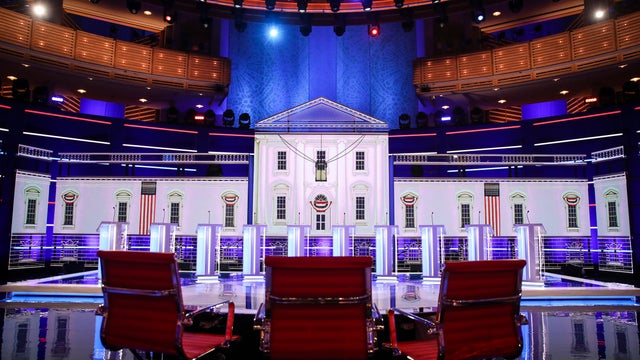
The Democratic National Committee released its plan for the 2028 presidential primary debates on Monday, outlining a series of twelve forums that will begin in June 2027 and continue into early 2028 as the field narrows. No Democrat has formally entered the race yet, although a number of high‑profile party members have signaled interest in running for the White House. DNC chair Ken Martin said each debate will be limited to 20 participants; if more candidates qualify, the event will be split across two evenings, with the line‑up for each night drawn at random.
Martin noted that the precise dates, broadcast partners and the polling or fundraising thresholds required for qualification will be disclosed later. The initial schedule calls for five debates in 2027 and seven in 2028.
In presenting the framework, Martin emphasized his long‑standing push to curb “dark money” in politics. All candidates will be asked to sign a pledge publicly condemning any super‑PAC or undisclosed‑donor money that supports their campaigns.
The timing of the announcement coincides with a wave of Democratic victories in this month’s midterm elections. On Sunday, the party secured its 258th seat in the House, giving it the largest majority it has held since 1992. In the Senate, Democrats added 56 seats, picking up wins in traditionally Republican states such as Mississippi, Iowa and South Carolina—the latter will host the first Democratic primary of the 2028 cycle.
For comparison, the DNC organized twelve debates for the 2020 contest, beginning in June 2019, which was the last time the party faced a competitive primary. The new schedule also reflects the committee’s recent overhaul of the primary calendar, moving South Carolina to the front of the line and pushing Iowa’s caucus out of the early window.
Under the new rules, any candidate who benefits from advertising paid for by a super‑PAC or a nonprofit that does not disclose its donors must publicly repudiate that assistance, although the party acknowledges it cannot ban such outside spending outright. The framework also creates a mechanism for campaigns to lodge complaints about alleged violations before each debate‑qualification period.
Beyond the pledge, the plan introduces tighter limits on coordination between campaigns and Democratic Party entities. Candidates will be prohibited from entering joint‑fundraising agreements with party committees during the primary and will not be allowed to authorize coordinated expenditures by state or local Democratic organizations. This is a departure from the 2015 arrangement in which Hillary Clinton’s campaign signed a joint‑fundraising deal with the DNC well before she secured the nomination.
The neutrality provisions are intended to prevent the kind of accusations that dogged the 2016 primary, when party officials were criticized for favoring former Secretary of State Hillary Clinton over Senator Bernie Sanders. In 2024, President Joe Biden faced little primary opposition and secured the nomination easily, only to withdraw in July after a poor debate showing. The party then rallied around former Vice President Kamala Harris, despite some senior Democrats arguing that a more open, albeit shorter, nominating process would have been preferable.
The new rules also build on an ongoing debate within the party about the role of outside money in presidential contests. During the 2020 primary, both Senator Sanders and Senator Elizabeth Warren made opposition to super‑PAC and dark‑money spending central to their campaigns, turning the issue into a litmus test for candidates.
According to the DNC, the changes are designed to limit the influence of undisclosed funding and preserve party neutrality during a contested primary. Because the regulations do not stop external groups from spending on behalf of candidates, the likely impact will be greater scrutiny rather than a substantial reduction in outside money. The effort is backed by Representatives Greg Casar and Jason Crow, Senators Andy Kim, Bernie Sanders and Elizabeth Warren, and former DNC chair Jaime Harrison.
Nevertheless, the measures stop short of barring outside groups from participating in the primary. Candidates are required to issue a single public disavowal of any supporting super‑PAC or nonprofit, even if the group continues to spend on their behalf. Moreover, because campaigns can file complaints against rivals ahead of each debate‑qualification window, disputes over compliance may become a recurring feature of the debate process.