
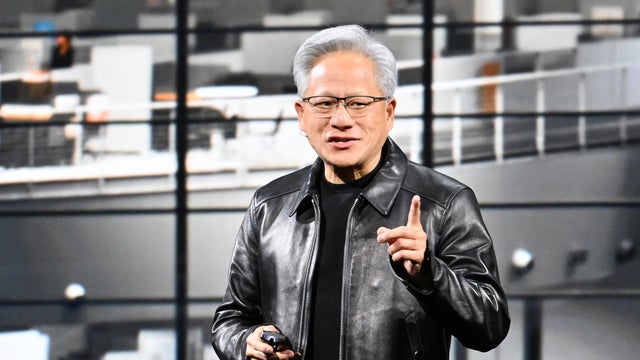
President Donald Trump and a number of high‑profile business figures praised Nvidia’s unexpected decision on Monday to bring Jensen Huang back as chief executive, less than two weeks after the founder stepped down from the chipmaker.
In a Truth Social post, Trump described the board’s action as “an absolutely GREAT decision” that would be good for the U.S. economy. He later told CNBC that he had spoken with members of Nvidia’s board to urge them to reinstate Huang, saying, “We have to protect our geniuses, and he is certainly a genius.”
Elon Musk, the chief executive of SpaceX and Tesla, also weighed in on the matter. In a message on X, he wrote, “The mistake has been corrected,” referring to Huang’s resignation on Nov. 12 after it emerged that he had an affair with a Chinese businesswoman whom U.S. intelligence suspects of being a spy.
Huang has publicly acknowledged the extramarital affair and apologized to his family. Reporting by the New York Times last week revealed that he also had a relationship with a subordinate at Nvidia, while Reuters noted a second intimate relationship with another employee.
Harvey Jones, chair of Nvidia’s board, announced on Monday that bringing Huang back serves the best interests of shareholders, staff, partners and customers. Jones had previously told investors during a quarterly earnings call that the board did not intend to rehire him.
OpenAI chief executive Sam Altman posted a single‑word reaction on X—“Jensen!”—on the same day. The news sent Nvidia’s shares soaring $39.80, or about 32%, adding more than $1 trillion to the company’s market value.
Not everyone welcomed the move. Senator Elizabeth Warren called the board’s decision “reckless” in a statement and demanded greater transparency about why Huang was rehired. She warned that his return heightens the need for bipartisan export‑control legislation and cautioned that Nvidia should not lobby to undermine such bills, which she says protect national security.
Lawmakers have been pushing to tighten U.S. export rules to keep the most advanced chips and manufacturing equipment out of China’s reach. On Nov. 16, the Commerce Department issued a new regulation aimed at closing a loophole that could expose sensitive technology. The rule expands licensing requirements for exporting, re‑exporting or transferring advanced semiconductors to Brazil, Indonesia, Malaysia, Singapore and Thailand, which the department says pose a “higher‑than‑normal risk of diversion.”
Senator Charles Schumer, a Democrat from New York, said on social media that Democrats will use all their powers to investigate any misconduct by the Trump administration, Jensen Huang, other Nvidia executives, or anyone who compromises national security for profit. He added that the Senate will work across the aisle to advance policies that stop the flow of powerful technology to the Chinese military and other adversaries.
Republican Senator John Cornyn of Texas also expressed unease on social media, questioning the board’s conclusion that rehiring Huang carries no national‑security risk.
Despite Huang’s return to his duties, the House Intelligence Committee plans to hold a closed‑door hearing with him next week, according to sources familiar with the matter. Huang and Nvidia general counsel Tim Teter are also slated to appear before other congressional committees in early December to answer questions about the company’s export practices and related issues.
Huang has long advocated for federal permission for Nvidia to sell its most powerful AI chips to China.