
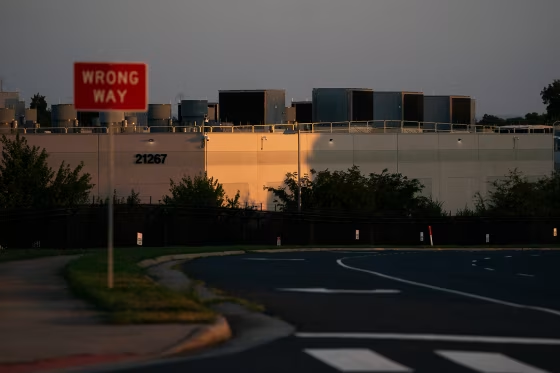
A Harvard University analysis released on Monday found that the 400 biggest data centers in the United States emitted more greenhouse gases in a single year than the entire country of Denmark, and that figure was calculated before the recent surge in artificial‑intelligence activity.
At the same time, delegates at the United Nations climate conference COP31 in Antalya, Turkey, introduced a voluntary “Antalya Artificial Intelligence Pledge.” The pledge urges corporations and governments to power data centers with renewable electricity, to be transparent about their energy, water use and emissions, and to apply AI in tackling climate change.
“People cannot be asked to shoulder higher costs, greater planetary heating and deeper inequality today on the promise of a better future,” said UN climate chief Simon Stiell during the pledge launch. “Future emissions‑reduction claims do not justify the current rise in pollution that worsens climate disasters.”
The pledge also stresses that AI should be directed toward solving the stubborn problem of climate change, reflecting growing worries about the sector’s expanding environmental footprint. Those concerns have already surfaced in U.S. elections and in local opposition to new data‑center sites.
The rapid growth of data‑center construction has spurred a search for new power sources, yet the biggest tech firms are missing their climate targets. According to a recent report by the watchdog group Climate Action Against Disinformation, electricity consumption by these firms is projected to climb 240 % between 2022 and 2025.
Harvard researchers examined 403 of the nation’s largest data centers over the period May 2024 to April 2025, using publicly available data and modeling to estimate electricity use and emissions. Their calculations, published in Nature Sustainability, put the carbon‑dioxide output of the facilities at roughly 28.3 million tons (about 25.7 million metric tonnes). The centers consumed about 82 terawatt‑hours of electricity—enough to run nearly seven million homes for a year—and more than half of that power came from fossil fuels, the main driver of global warming.
The emissions figure is two to three times higher than earlier estimates, according to senior author Francesca Dominici, a professor of biostatistics at Harvard. “That amount of CO₂ is comparable to the total emissions of a U.S. state such as Michigan or a small European nation,” she said, adding that plans for roughly 2,000 additional data centers make the outlook even more troubling. “We are moving backward on the goal of curbing CO₂.”
Independent experts in climate science, energy and AI said the study’s methodology was sound, noting that the reliance on modeling was necessary because many companies do not disclose detailed power‑use or emissions data. “Effective environmental management requires accurate measurement and transparency,” said Fengqi You, an energy‑systems researcher at Cornell University who was not involved in the study. “The AI footprint is not fixed; it depends on where facilities are built, how efficiently they run, and how their electricity is sourced.”
The Antalya AI Pledge, co‑authored by Turkey, the host of the UN talks, and the International Telecommunication Union, calls for data centers to adopt clean electricity and efficient water‑use practices. It also urges responsible AI design, the use of environmental standards, and the recycling or repurposing of hardware. Signatories are asked to assess and disclose data‑center impacts and to promote AI as a climate‑change solution.
COP31 president Murat Kurum has urged world leaders to discuss openly the rising energy demands of AI and to begin establishing clear guidelines.
Former U.S. vice president Al Gore, a longtime climate advocate, emphasized the importance of carbon‑free power for data centers but expressed less alarm about AI‑related emissions than some critics. In an interview with the Associated Press, Gore cited a study by British economist Nicholas Stern that predicts a 6‑9 % cut in greenhouse‑gas emissions by 2030 thanks to advanced AI helping improve material and energy efficiency.
Caleb Max, president of the National Artificial Intelligence Association, argued that AI will not only address the energy challenges of data centers but also unlock breakthroughs that could mitigate climate change and improve human well‑being. “I acknowledge concerns about data‑center energy and water use, but the fears may be exaggerated,” he said.
Philip Newell, a spokesperson for Climate Action Against Disinformation, remained skeptical. “We are offered hope on one hand while the harms are hidden on the other,” he warned.
Data‑center equipment generates substantial waste heat that is expelled into the atmosphere. One strategy to lessen the environmental impact is to capture that heat for nearby residential or commercial use. Danish engineering firm Danfoss described waste heat as “the world’s largest untapped energy source,” noting that repurposing it could replace natural‑gas heating. The International Energy Agency estimates that, if fully integrated into district‑heating networks, data‑center waste heat could supply roughly 10 % of European homes by 2030.
European Energy and Housing Commissioner Dan Jørgensen, speaking at COP31, said Europe must replace imported fossil fuels by harvesting otherwise wasted heat and by exploiting geothermal resources.
In Texas, industrial developer BaRupOn is constructing an advanced‑manufacturing campus that plans to convert recaptured heat into additional on‑site electricity, according to CEO Balaji Tammabattula. The company also intends to build a data center in North Dakota that would supply heat to the surrounding community.
Greg Henze, a professor at the University of Colorado Boulder, noted that modern data centers, which often use liquid cooling, provide a steady stream of heat at temperatures well suited for integration into thermal‑energy networks, making them an ideal partner for such recycling schemes.