
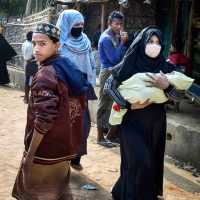
The International Court of Justice announced on Thursday that the mass killings and widespread sexual assaults carried out by Myanmar’s security forces against the Rohingya Muslim minority in 2017 meet the legal definition of state‑sponsored genocide.
During a three‑hour session in the World Court’s Great Hall, President Yuji Iwasawa read the ruling, stating that Myanmar’s forces murdered thousands of Rohingya civilians, committed extensive sexual violence, inflicted extreme brutality on children, and attacked people trying to flee. The judgment is the first time an international tribunal has found a state itself responsible for genocide, and only the fourth occasion since the Holocaust that the legal threshold for genocide has been deemed satisfied.
The case was brought by the Gambia, a Muslim‑majority country in West Africa, which filed the suit at The Hague in 2019. Gambia asked the court to determine that Myanmar had violated the 1948 Genocide Convention, to order the cessation of any unlawful actions targeting the Rohingya, and to ensure that those responsible are held accountable.
Myanmar has consistently defended its 2017 military operation, describing it as a legitimate counter‑terrorism effort rather than a genocidal campaign.
The decision arrives while the court is also hearing other genocide allegations, including those related to the conflict in Gaza and the war in Ukraine. “Genocides share common patterns in how they are carried out, so this ruling will resonate in other proceedings,” said Melanie O’Brien, a professor of international law at the University of Western Australia.
In August 2017, the Myanmar army launched a “clearance operation” in northern Rakhine State after an attack by a Rohingya insurgent group. The operation was accompanied by reports of mass rapes, killings and the burning of thousands of homes, prompting hundreds of thousands of Rohingya to flee across the border into Bangladesh.
Under the Genocide Convention, the court must find that the perpetrators intended to destroy, in whole or in part, the Rohingya group. Approximately 1.2 million Rohingya now live in Bangladesh, mainly in overcrowded camps in Cox’s Bazar, where they face fire hazards, disease, monsoon‑triggered landslides, poor sanitation and strict limits on employment.
Gambia’s filing also seeks reparations for the Rohingya, including granting them full citizenship in Myanmar and the right to return to their homes. While the court’s judgments are final and binding, it lacks enforcement powers beyond reporting any failure to comply to the United Nations Security Council.
The finding would be the first genocide judgment ever issued by the International Court of Justice. In 2007, the court had concluded that Serbia failed to prevent genocide in the 1995 Srebrenica massacre, where Bosnian Serb forces killed about 8,000 Muslim men and boys.
Other cases before the Hague include South Africa’s accusation that Israel violated the genocide convention during its military actions in Gaza—a claim Israel rejects—and Ukraine’s claim that Russia fabricated genocide allegations to justify its 2022 invasion.
Yasmin Ullah, a Rohingya human‑rights activist who escaped Myanmar with her mother as a child in the 1990s, said the case reflects her community’s longing for acknowledgment and dignity. “We have been left in a state of limbo for almost a decade,” she said. “The Rohingya are living in extremely precarious conditions throughout the region.”