
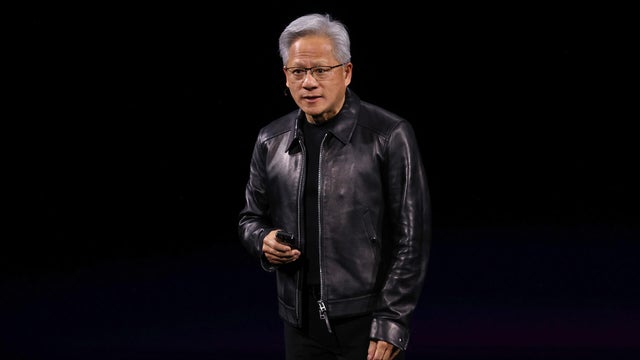
Washington — New details about Nvidia chief executive Jensen Huang’s alleged extramarital relationship with a woman said to be linked to Chinese intelligence have thrust the AI leader into intense scrutiny. Lawmakers and state officials are probing whether Nvidia may have sidestepped federal export controls designed to keep its most sophisticated chips out of China.
Huang stepped down from his role after the relationship with Alice Huang, a former executive at Singapore‑based data‑center firm Megaspeed, became public. Yet on Monday the company’s board announced that it had restored him to the positions of president and chief executive officer.
The announcement reverberated through both business circles and the political arena. President Trump told CNBC that he had spoken with the board and “convinced them” to bring Huang back, adding that his administration had received “assurances” that Huang does not pose a national‑security threat. Nvidia said it had “received input from senior levels of the United States government, and based on that input, the Board is confident that Mr. Huang’s reinstatement poses no national‑security risk.”
State and congressional investigations are expected to continue despite the board’s decision. California Attorney General Rob Bonta, a Democrat, issued a subpoena to Nvidia last week after learning of Huang’s affair with the woman alleged to have ties to China’s Ministry of State Security. In a statement Bonta said the state’s Department of Justice is seeking information on whether Nvidia’s advanced chips or confidential data were transferred to China and whether the company misled investors and the public. “The conduct of Nvidia and its former CEO raises bright red flags, including about the ways in which the company may have misled investors,” he said. “My office is investigating whether Nvidia or Jensen Huang’s actions resulted in China obtaining advanced chips or confidential information — and if Nvidia misled investors and the public about this risk, in violation of the law.”
Congressional committees are also moving ahead. Huang is scheduled to appear behind closed doors before three House panels—the Intelligence Committee, the Foreign Affairs Committee and the China Select Committee—on Dec. 1. Nvidia general counsel Tim Teter will testify before those committees on Dec. 2, and the Senate Banking Committee will hold a public hearing with Huang on Dec. 3.
Democrats, who will control both chambers of Congress in January, say they will investigate Nvidia and Commerce Secretary Howard Lutnick, whose department enforces export controls on sensitive technology. House Democratic Leader Hakeem Jeffries, the likely next speaker, called the board’s decision to reinstate Huang “indefensible, irresponsible and incomprehensible.” He added, “Congress will not be deterred from conducting a swift, thorough and wide‑ranging investigation into business malfeasance by NVIDIA and corrupt abuse of power by Howard Lutnick and the Department of Commerce.”
Senate Democrats issued similar statements. Minority Leader Chuck Schumer wrote on X, “Trump is putting his own financial interests and the needs of his billionaire buddies before our national security… Democrats will wield their full power to investigate any wrongdoing by the Trump Administration, Jensen Huang, other NVIDIA executives, and anyone selling out our national security for financial gain.” Senator Elizabeth Warren, who is set to chair the Senate Banking Committee, said Nvidia officials and the Trump administration must answer questions about export‑control compliance and the “input” that senior officials gave to support Huang’s return.
A group of five Democratic senators—Warren, Chris Coons of Delaware, Ron Wyden of Oregon, Jack Reed of Rhode Island and Maria Cantwell of Washington—issued a joint statement demanding that the president and his administration disclose why Trump intervened on Huang’s behalf, whether any counter‑intelligence or national‑security concerns were ignored, and whose interests the intervention served.
The Justice Department and the Commerce Department previously disclosed that they have been investigating Megaspeed, a Singapore‑based computing company that counts Nvidia as a client, since 2024. In May 2025 the Commerce Department requested records from Nvidia concerning any direct or indirect sales to Megaspeed and placed the Singapore firm on its “no‑sell” list the following month. In June 2025, agents from the Commerce Department’s Bureau of Industry and Security, working with Singaporean law‑enforcement officials, conducted an on‑site inspection of Megaspeed and interviewed Alice Huang. After that visit, the Justice Department assumed primary responsibility for the criminal probe. Megaspeed has denied any wrongdoing and said Alice Huang left the company in August 2025. Chinese officials have rejected the claim that she is a spy.
President Trump told reporters earlier this month that the FBI was “looking into” Huang’s relationship with Alice Huang, who is not related to him. A Justice Department official said on Monday that Attorney General Todd Blanche discussed Jensen Huang and Nvidia with Trump over the weekend and affirmed that the DOJ has found no evidence of wrongdoing by either the CEO or the company. At a press conference on Tuesday, Blanche said the department has no information indicating that Huang committed any criminal act and that, had there been evidence, he would have informed the president. When pressed about how the DOJ reached that conclusion without a formal investigation into Alice Huang or possible export‑control violations, Blanche declined to answer, but he described Nvidia as a “good corporate citizen.” He added that “looking into it” does not equate to an investigation of the CEO, his alleged mistress, or the company, and that a “collective consensus” had been reached that Huang poses no national‑security risk.
Separately, the Securities and Exchange Commission is conducting a civil probe of Nvidia, the Wall Street Journal reported last week. Sources said the SEC is examining whether the company’s disclosures misled investors, including changes to how it reported international chip sales and the omission of revenue tied to Singapore from its financial statements last year. Reuters also noted that the SEC is reviewing potential accounting issues at Nvidia, though the agency did not specify when its inquiry began and declined to comment.
Huang resigned as president and CEO on Nov. 12, and the board named chief financial officer Colette Kress as interim chief executive. At the Nov. 17 earnings call, board chairman Harvey Jones said the company “does not intend to reinstate Jensen as CEO,” and Kress echoed that sentiment in a CNBC interview the same day. Less than a week later, on Nov. 23, the board reversed course and reinstated Huang.
Following a New York Times report that Huang may have been the target of a Chinese intelligence operation, the board announced earlier this month that it would commission an independent investigation and engaged the law firm Wachtell, Lipton, Rosen & Katz to assist. After declaring that Huang would return as president and CEO, the board said the investigation “will proceed to conclusion.” The statement added, “Mr. Huang fully supports the investigation and is committed to cooperating with it.”