
WASHINGTON — The top Democrat on the House Oversight Committee sent a batch of preservation letters on Wednesday to a group of individuals linked to former President Donald Trump, urging them to retain any documents that could be relevant to investigations the committee plans to launch after Democrats assume control of the House in January.
The letters were signed by Rep. Robert Garcia, a California Democrat who is expected to become the committee’s chair when the new Congress convenes. In a statement, Garcia said the outreach was part of “Oversight Democrats’ effort to end this administration’s self‑dealing, misconduct, and abuse,” adding that the inquiries would “lay the groundwork for legislation that helps all Americans” and that “this is just the beginning.”
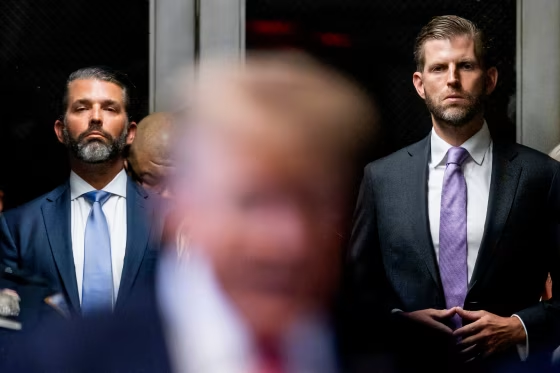
Garcia’s office targeted a mix of Trump family members, former officials and private‑sector figures. The correspondence was sent to Donald Jr. and Eric Trump, as well as to Kimberly Guilfoyle, the former ambassador to Greece and ex‑fiancée of Donald Jr. Jared Kushner also received a letter that referenced his Middle‑East investment activities.
Among current and former administration officials named were Vice President‑designate JD Vance, former White House chief of staff Stephen Miller, ex‑White House chief of staff Susie Wiles, Attorney General Todd Blanche, former Department of Homeland Security secretary Kristi Noem and former DHS senior adviser Corey Lewandowski.
Catherine Townsend, chief executive of the Trust for the National Mall, was asked to preserve records concerning the construction of a White House ballroom that has been funded with a combination of taxpayer money and private donations, including contributions from corporations that do business with the federal government. The Trust, a nonprofit, is soliciting both public and private funds for the project.
Two officials from the Federal Bureau of Prisons—director William K. Marshall III and warden Tanisha Hall of the Federal Prison Camp Bryan—were also mailed a preservation request. Their letters focused on the decision to move Ghislaine Maxwell, the convicted co‑conspirator of the late financier Jeffrey Epstein, to a minimum‑security camp. Maxwell is serving a federal sentence for sex‑trafficking offenses tied to her role in recruiting teenage girls for Epstein.
Garcia is not the only Democrat receiving pushback from the Justice Department. Aaron Reitz, the U.S. attorney for the Southern District of Texas, has issued his own preservation letters to several Democratic lawmakers, including Garcia, Senators Elizabeth Warren of Massachusetts, Richard Blumenthal of Connecticut, and Elissa Slotkin of Michigan. Reitz posted the letters on X, describing them as part of a “preliminary investigation” into the speech of members of Congress.
Legal scholars have criticized Reitz’s approach, noting that the letters invoke two federal civil‑rights statutes in a manner that departs from typical DOJ practice. An independent nonprofit has filed an ethics complaint against the attorney over the matter.
Speaking to NBC News, Reitz said he remains in “constant contact” with senior Justice Department officials and that the letters resulted from “organic conversations” with department leadership. He insisted he is not trying to chill free speech, but merely wants to deter conduct that could violate federal law.
In a related development, White House counsel Will Scharf sent Garcia a letter last month warning that the Trump administration was “monitoring” the public statements of Democratic members of Congress as they prepare investigations, and cautioned that threats or processes intended solely to intimidate or harass executive‑branch officials could cross into criminal conduct.
The Supreme Court has long held that congressional investigations must serve a legitimate legislative purpose. Members of Congress are protected not only by the First Amendment but also by the Speech or Debate Clause of the Constitution, which shields legislators from prosecution for actions taken in the course of their official duties.