
NATO members are increasingly uneasy as the conflict that began with Russia’s full‑scale invasion of Ukraine five years ago spreads beyond the two countries’ borders.
Poland said Russia again breached its airspace on Tuesday, alleging that a surveillance drone briefly entered Polish territory before returning to Ukraine. The Polish deputy defence minister, Paweł Zalewski, told Radio Poland that the drone was in Polish airspace only for a short period and was tracked from the moment it appeared. “I consulted the Armed Forces’ Operational Command, and we decided not to shoot it down to avoid any civilian casualties or damage,” he said, adding that Poland believes the incursion was intentional. The accusation follows a late‑last‑week incident in which three Russian missiles landed on Polish soil.
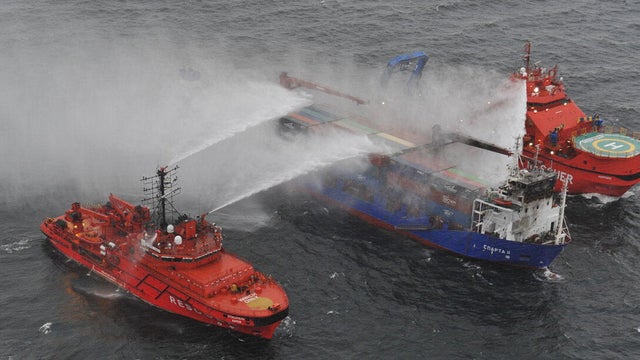
In Norway, defence minister Tore Sandvik said the government is in talks with Ukrainian officials about the need for stability in the region after a Saturday strike hit a Russian cargo ship that is under U.S. sanctions in the Gulf of Finland. Ukrainian President Volodymyr Zelenskyy confirmed on social media on Monday that Ukrainian forces used seven domestically built naval drones to attack the vessel. The ship, the Sparta II, is operated by the Russian defence logistics company Oboronlogistika and has been sanctioned by the United States since 2022 for moving military equipment. Russian authorities said the ship was towed back to a Russian port on Tuesday.
Italy’s foreign minister, Antonio Tajani, spoke on Tuesday with his Ukrainian counterpart, Andriy Sybiha, to voice concern over a separate Ukrainian attack that took place over the weekend off Libya’s coast. Zelenskyy praised the operation on Monday, noting that it sank a Russian warship and damaged another sanctioned Russian cargo vessel, the MV Angara, near the Mediterranean port where Russia maintains a naval base. In a statement, Italy’s foreign ministry said Tajani stressed to his Ukrainian counterpart how important it is for Italy to work to keep the conflict from spilling into the Mediterranean.
Zelenskyy framed the strikes on the Russian ships as lawful defensive measures in response to Russia’s ongoing missile and drone assaults launched from land, sea and air. “Even with the enemy’s attempts to counter us, the Russian corvette Merkury was sunk,” he said. “We continue operations in the designated waters, responding to Russian aggression while developing our own weapons.”
The Russian foreign ministry this week accused Estonia, another NATO ally, of being “on the verge of triggering open war” after the Baltic state announced it would close its land border with Russia on 1 December. Estonia had earlier accused Russian intelligence of plotting to infiltrate and sabotage the domestic defence firm Threod Systems. Estonian foreign minister Margus Tsahkna warned that any effort to threaten Estonia’s security or spread fear would be met with a decisive response, adding that the border closure was a clear message to Moscow that its hostile actions will have consequences.
Poland’s prime minister recently said a large‑scale security operation along the Polish‑Russian border may have averted a sabotage or provocation attempt by Russian agents, underscoring the heightened vigilance in the region.
Former U.S. Army Europe commander Ben Hodges told CBS News on Tuesday that, in his view, all of Ukraine’s actions are legitimate self‑defence against Russian aggression. “Ukraine is doing exactly what it needs to do to disrupt Russian oil and gas exports and other international activities that sustain its war effort,” he said, noting that the attacks also send a signal to anyone who might support Russia’s so‑called shadow fleet – a network of loosely registered tankers used to evade sanctions on Russian oil sales.
Hodges said Kyiv has likely weighed the risks of striking Russian vessels in neutral waters, acknowledging that Russia could use such incidents to justify attacks on Ukraine’s economy and civilian infrastructure, but he believes Ukraine anticipates that response. “Most European nations understand this and are unlikely to be swayed,” he added.
CBS national‑security analyst Aaron MacLean said Ukraine’s expanding campaign against Russian targets is bound to create friction with partners in Washington and NATO who feel their own security could be threatened by operations near their borders. He noted that Ukraine can no longer count on unconditional U.S. backing, which reduces Washington’s leverage over Kyiv’s decision‑making. While European support for Kyiv remains strong, MacLean observed that Ukrainians feel they are fighting a war on behalf of many NATO eastern members and therefore believe they have some latitude to inflict pain on Russia, even when such actions make some NATO allies uncomfortable.